Here's a pattern that might sound familiar: A patient completes your pre-screener. They seem qualified. Motivated. Ready to take the next step.
Then... nothing. They vanish into a bucket labeled "Lost to Follow-Up."
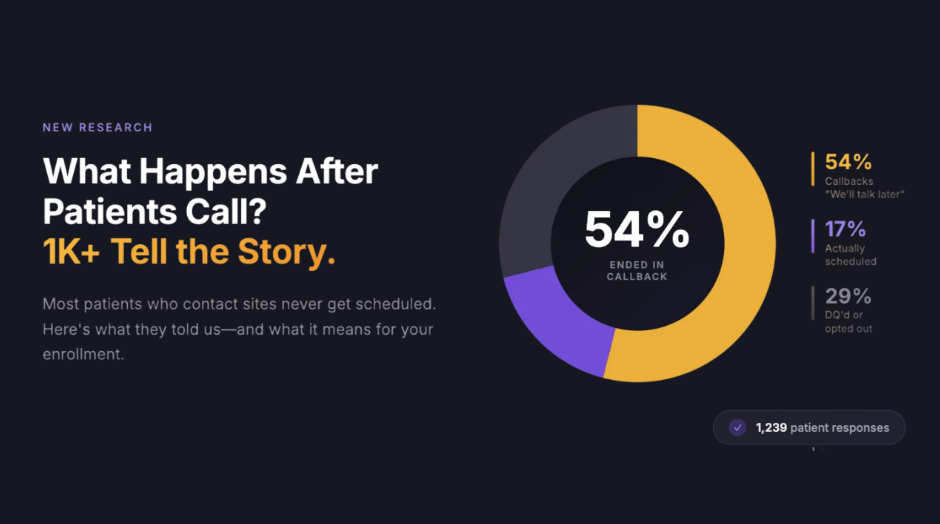
We wanted to understand why. So we surveyed over 1,000 patients (!!) who had expressed interest in clinical trials but never made it to a screening visit. We asked them one simple question: what happened after you contacted the site?
The results point to something worth examining: the problem often isn't patient hesitation. It's what happens in that first conversation.
The Reality Check
Only 17% of patients who contacted a site left that interaction with a screening visit scheduled.
These aren't cold leads. These are patients who already completed a pre-screener, already expressed interest, already picked up the phone. And five out of six walked away without a next step on the calendar...
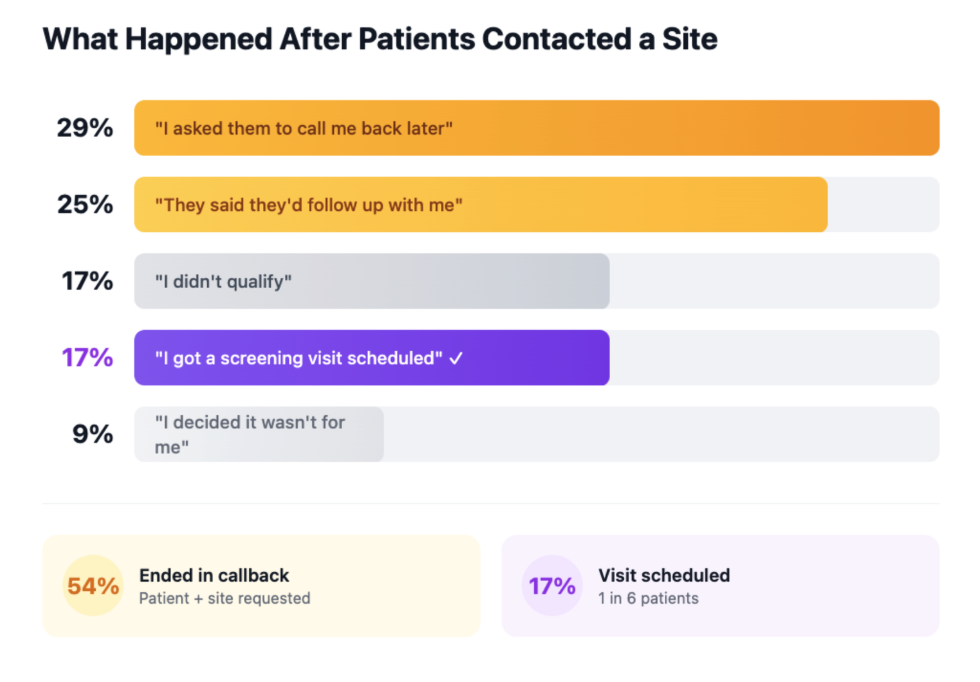
What patients told us happened after they contacted a site (example narration):
- 29% — "I asked them to call me back later"
- 25% — "They said they'd follow up with me"
- 17% — "I didn't qualify"
- 17% — "I got a screening visit scheduled"
- 9% — "I decided it wasn't for me"
The 17% who didn't qualify? That's protocols doing their job. The 9% who opted out? Most patients who decided the trial wasn't right for them after learning more (these instances are expected... and typically this is totally valid).
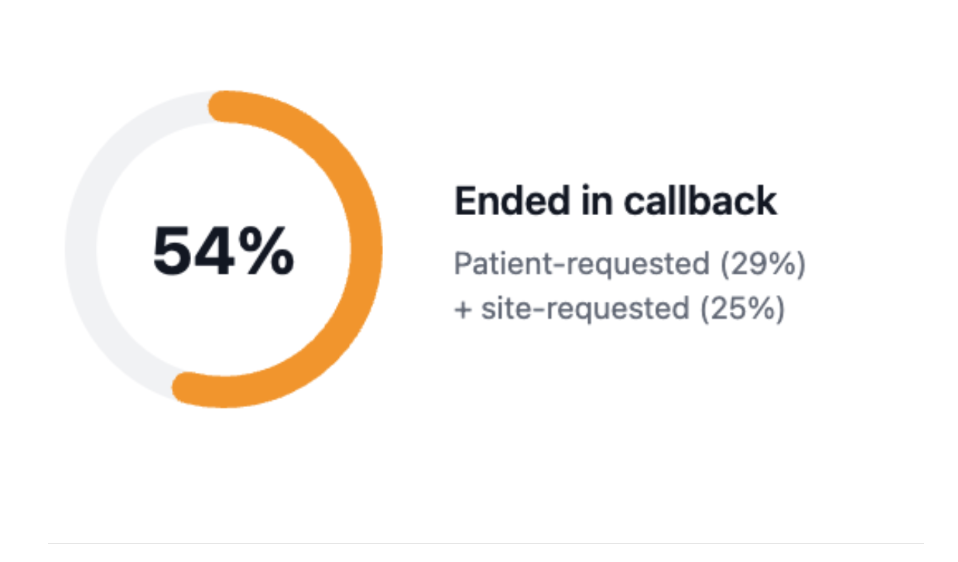
But 54% of all contacts ended in some version of "we'll talk later." That's where momentum goes to fade (not always, but often).
The Callback Conundrum
Patient-requested callbacks (29%) make sense. Life is complicated. People need to check schedules, talk to family, think it over.
But site-requested callbacks (25%) warrant an even closer look. These are patients who are often ready to move forward... and the site wasn't quite ready to schedule them.
To be clear: This isn't an indictment of site operations. Anyone who's worked as a study coordinator knows the reality: three active protocols, a packed PI calendar, complex patient histories that genuinely need review. Saying "let me get back to you" is often the only honest answer.
But understanding why these callbacks happen reveals where small adjustments might help.
Inside the Site Callback
We asked patients who reported site-initiated callbacks to describe what they were told. Four patterns emerged:
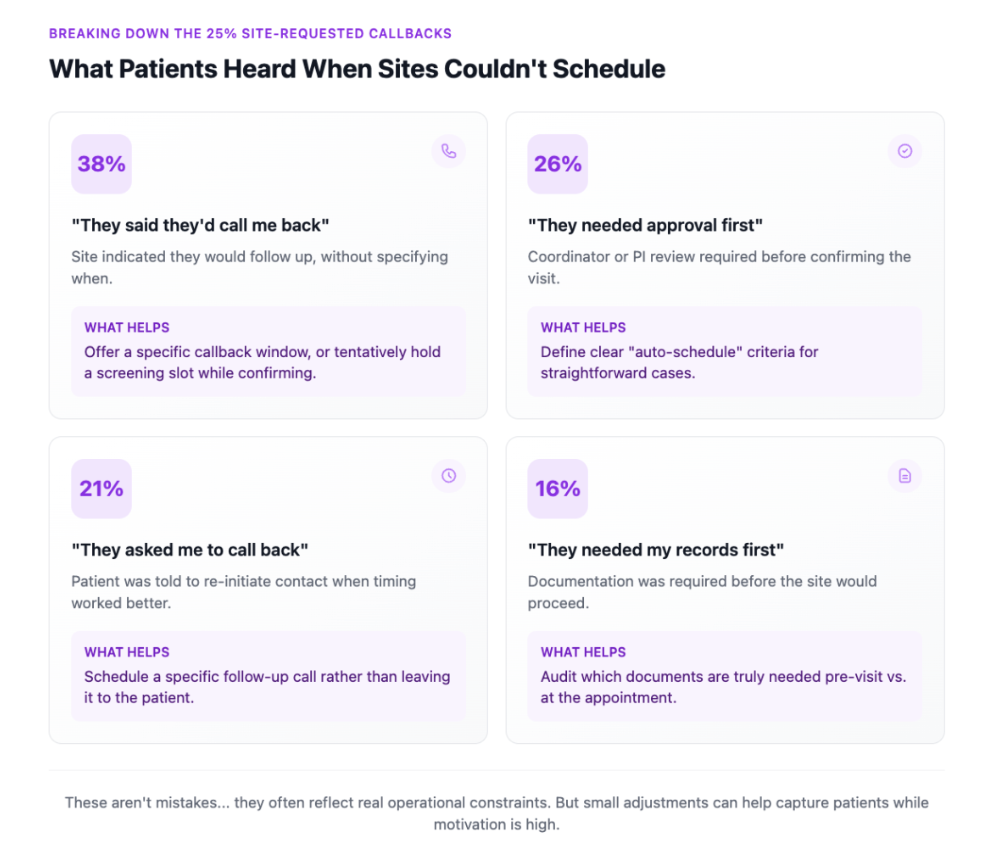
"They said they'd call me back" — 38%
- Open-ended callbacks convert at lower rates than specific ones. "Someone will call you" feels different than "I'll call you Thursday at 2pm to confirm your appointment."
- What helps: Offer a specific callback window, or tentatively hold a screening slot while confirming details.
"They needed approval before scheduling" — 26%
- Sometimes legitimate. But not every patient needs PI review before booking.
- What helps: Define clear "auto-schedule" criteria for straightforward cases. Complex patients still get proper review.
"They asked me to call back later" — 21%
- Feels polite. But it transfers responsibility to someone already navigating a stressful health situation.
- What helps: Schedule a specific follow-up call rather than leaving the ball in the patient's court.
"They needed my medical records first" — 16%
- Sometimes necessary. Sometimes protocol habit.
- What helps: Audit which documents are truly needed pre-visit versus what can be collected at the appointment.
The Patients Who Walked Away
Of the 9% who opted out after contacting a site:
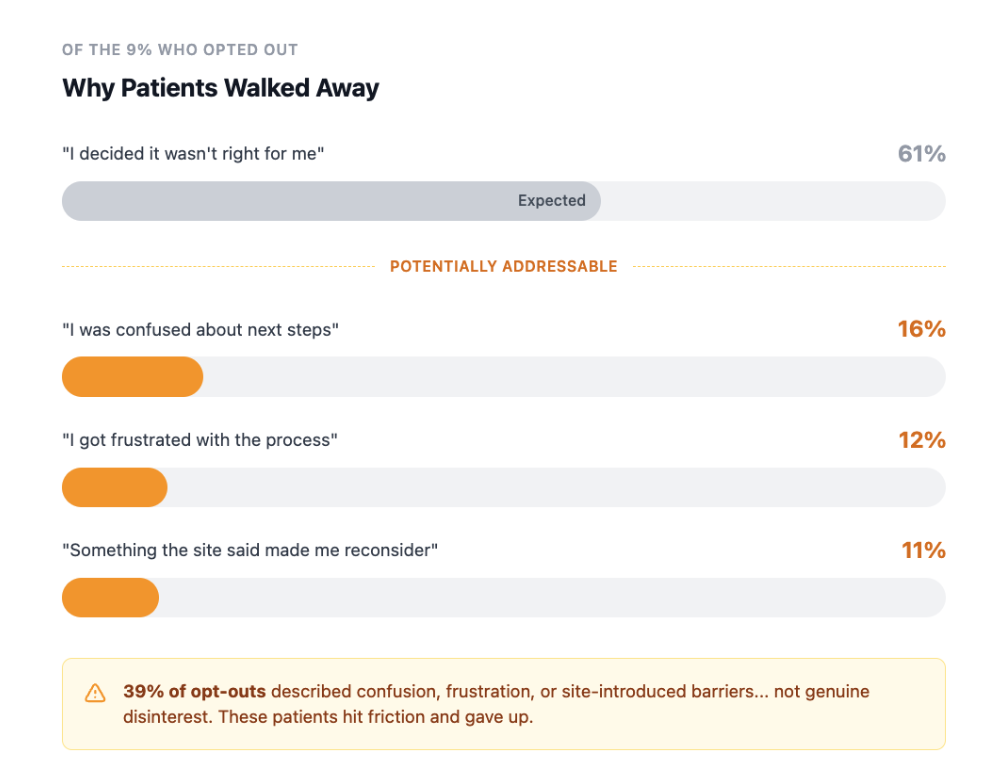
That 39% in the latter categories? Those oftentimes aren't patients who evaluated the trial and decided against it. A large portion of that 39% are patients who hit friction and gave up.
The 60-Day Connection
Remember our piece on the 60-day pipeline? Every callback adds time to the journey. Every "we'll follow up" creates a gap where motivation can fade.
The sites that consistently hit enrollment numbers haven't eliminated callbacks. They've gotten better at handling the calls that matter... training staff to resolve questions in real-time, empowering coordinators to schedule without escalation, and treating every inbound call as a conversion opportunity.
What This Means For You
A few questions for your next team meeting:
- Track the right number. What percentage of your contacts result in a booked visit versus a callback? Or better yet: what percentage of your calls end in "site-initiated callback"?
- Audit your callback reasons. For site-initiated callbacks, what's driving them? Capacity? Process? Information gaps?
- Identify quick wins. Which callback scenarios could become first-call scheduling with small changes?
Request our free template: "Patient Contact Outcome Tracker" (email me brandon@withpower.com)
The Bottom Line
Of the 1K+ patients we surveyed, only 17% ended their first site conversation with a screening visit scheduled.
The 25% who encountered site-driven callbacks? That's worth examining. Not because sites are doing something wrong, but because small adjustments... specific callback times, clearer auto-scheduling criteria, proactive follow-up... might capture more patients during that narrow window when motivation is highest.
Your patients showed up. The question is whether we're ready to schedule them when they do.
Curious how your site's contact-to-scheduling rate compares? Contact brandon@withpower.com to learn more.