What a nearly-pathologist turned neuroscience CMO learned about humility, endpoints, and following the science wherever it leads.
"The drug gods can be cruel. You have to have a lot of humility when you're doing this."
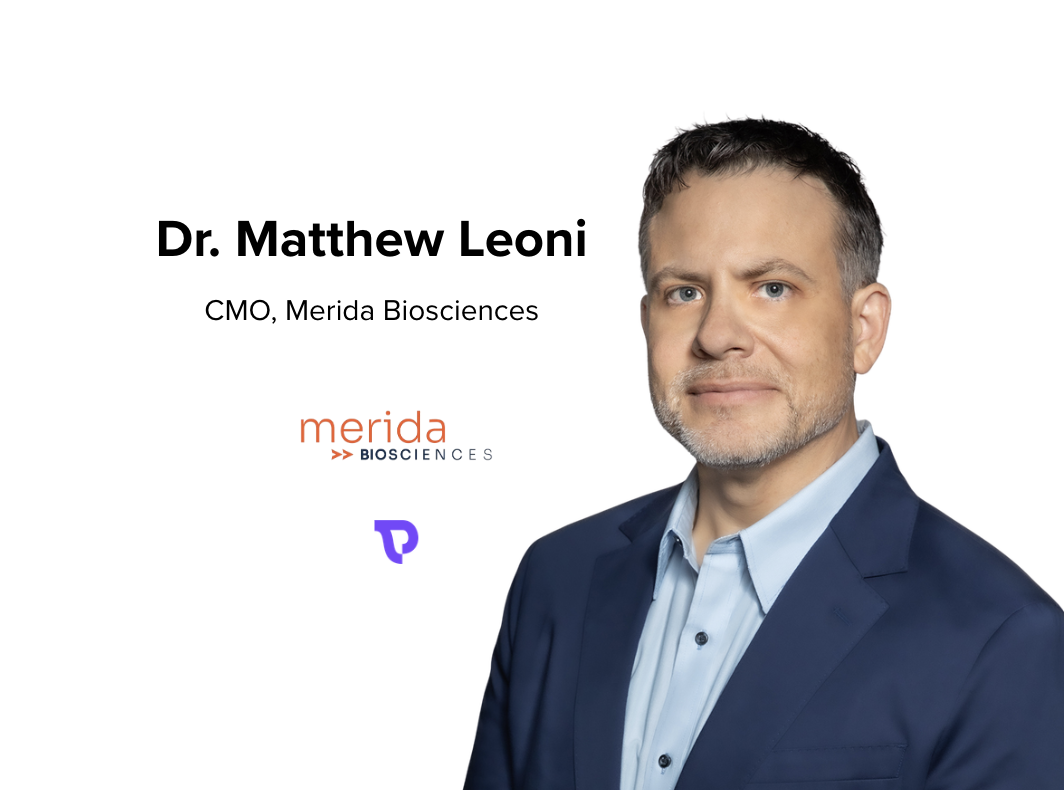
Matt Leoni was going to be a pathologist. Penn med school. The MD and MBA. A clear career path mapped out. Then he looked at what that life was actually going to look like, and stopped.
I previously sat down with Matt for an episode of Power to the Patients, and within the first few minutes it was clear this wasn't going to be a standard industry conversation. "I just realized kind of what that life was going to be," he told me. "And I just realized there was other things I wanted to do."
Full video interview | Audio podcast
The Scenic Route
Matt didn't arrive at neuroscience in a straight line. He started in dermatology, got drugs approved, followed the science into immunology, then crossed into the MS space at Novartis. From there he went deeper into neuropsychiatry, eventually working with Ray Sanchez. When Pfizer spun out its neuroscience pipeline to form Cerevel Therapeutics, Ray was tapped to lead it. He didn't ask Matt. He just found a way to bring him along.
"Ray went to Cerevel and he didn't ask me, he just found a way to work together again."
That's how the best moves in this industry tend to happen. Not planned. Someone who knows your work calls and says: you're coming with me.
At Cerevel, Matt helped build the company from the ground up. From formation through a public debut to a multi-billion-dollar acquisition by AbbVie in 2024. Along the way: Parkinson's, epilepsy, schizophrenia. A portfolio-level view of what late-stage neuroscience development actually looks like when the stakes are real.
"The Drug Gods Can Be Cruel"
Ask Matt to describe the neuro development landscape and he doesn't give you the polished version.
"Neuro is really hard just because again, it's so subjective. You're talking about how people feel and how they feel kind of on a day."
The subjectivity of endpoints in neuropsychiatry creates a specific kind of trial fragility. When your primary measure is a clinician's interpretation of what a patient is thinking — not a biomarker, not a blood test — you're building on sand. And the placebo problem isn't getting better.
"Year over year it just keeps getting worse... you can look at all the metadata that shows a trajectory of just placebo response and variability getting harder and harder to show drug effects."
Whether we've saturated patient populations or recycled too many of them, as he put it, 'year over year it just keeps getting worse.'
The Cerevel schizophrenia program hit this wall. Matt mentioned it early and without defensiveness. "We just kind of dealt with that... and it brings you back to reality." He has a phrase for moments like this. The drug gods. "The drug gods can be cruel. You have to have a lot of humility when you're doing this."
It's a funny thing to hear from someone who helped build a company through a multi-billion-dollar exit. But humility in drug development isn't pessimism. It's what keeps you honest when the data doesn't go the way you planned.
When the Endpoint Is the Problem
One of the sharper moments in our conversation: why aren't better endpoints getting developed?
Matt's answer was direct.
"As a drug developer I have an asset and I'm being pushed to develop something fast... the extra time it takes to just go off the reservation and develop a new measure, I'm not incentivized to do that. I'm incentivized to kind of use what works already."
The PANSS scale in schizophrenia has been the primary endpoint for decades. It has known limitations. Everyone in the room knows it. And almost nobody deviates from it, because the FDA accepts it, the precedent is there, and your board isn't going to reward the time it takes to do something new.
"You're retrofitting your drug into fitting into a regulatory pathway because you know it works that way."
The catch-22 is real: the only time sponsors are truly pushed to pioneer new endpoints is when there's no existing precedent at all. Everywhere else, the path of least resistance points backward. And by the time you realize you should have tried something different... "it's too late," he said. "Too late."
What Actually Excites Him
Matt spent most of his career on the symptomatic side of drug development, which makes his take on where the field is heading more credible than most.
"I would love... I think we're getting closer and closer now to more definitive disease-modifying therapies. Most of my career stuff has been on the symptomatic side."
The places he's watching closely: the muscarinics, GBA-Parkinson's programs targeting genetic subtypes of the disease, and neuroinflammation in schizophrenia as a potential unlock for something genuinely novel.
On psychoplastogens — the non-hallucinogenic neuroplasticity drugs — he was cautiously intrigued. "If they can really deliver on the psychedelic horsepower without the psychedelic part... that's where you have a real potential upside." But the caveat was immediate. If the effect size is modest, they'll run into the same wall every incrementally better drug runs into. Small effects don't survive placebo-controlled trials designed on old endpoints.
The Magic Wand Question
If he could change one thing about how drug development works?
He thought about it. Then: the incentive structure.
"You'd see more losses and you'd see more failures. But I think it would put us on a pathway to faster, large explosion and groundbreaking changes."
It's a tall order. The model is what it is. Large pharma scouts and acquires, small biotechs take the first risk, everyone tries to limit downside. Incremental progress, then a flash point. "We make incremental changes and then hopefully the science catches up at some point and there's a flash point and then we have a big outcome."
A New Chapter
When we sat down to talk, Matt had just left Cerevel following the AbbVie acquisition and was stepping into a new CMO role at what was then a yet-to-be-announced biotech. He was clearly energized. "I get the chance to build my own company, bring in my own team."
That company is now public: Merida Biosciences, which closed a $121M Series A in April 2025 to pursue a novel precision approach to autoimmune and allergic diseases. A departure from the neuro world he'd spent years in, but consistent with the whole arc. Follow the science, take the less certain path, build something from scratch.
He'll have more drug gods to contend with. Based on everything he said, he seems ready for it.
Brandon Li is co-founder of Power, a clinical trial patient recruitment and site performance company.