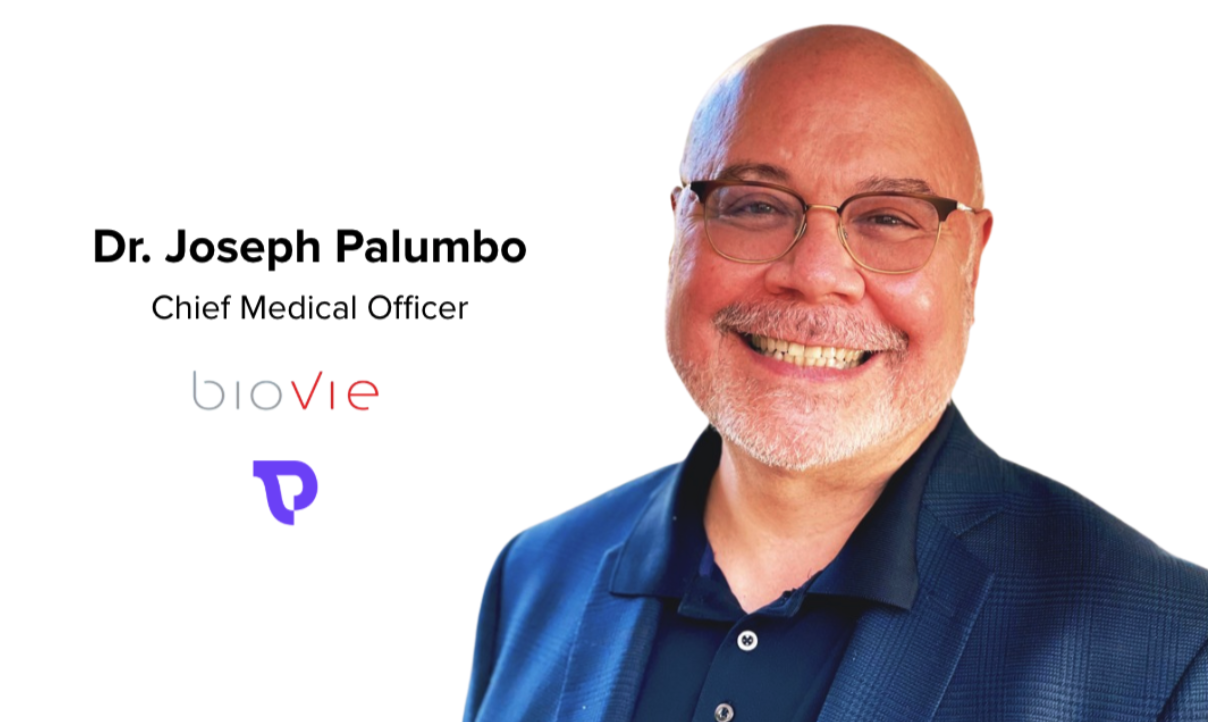
In 1996, a young psychiatrist named Joseph Palumbo joined Cephalon to work on myotrophin, a promising ALS candidate. The drug had positive Phase 2 data. The scientific rationale seemed sound. The program ultimately didn't succeed.
Twenty years later, working at Mitsubishi Tanabe Pharma, Joseph Michael Palumbo, MD, LFAPA, MACPsych, led the US approval of edaravone: the first new ALS therapy in over two decades. What changed? A series of strategic decisions around patient selection, trial duration, and endpoint choice that Palumbo is now applying to Alzheimer's and Parkinson's disease at BioVie.
Full video interview here | Audio podcast here
Also: subscribe to ClinOOPs for more weekly insights & discussions with industry leaders.
"The scientists in Japan had taken a drug they knew to be effective in stroke. They conducted a trial. It didn't quite work. They conducted another trial and changed the inclusion criteria, the dosing—and they finally got it right."
— Joseph Palumbo, MD
The Enrollment Decision That Changed Everything
What they got right was enrichment. Rather than enrolling broad ALS populations and running multi-year studies, the team took a different approach: identify patients actively progressing and design shorter, smaller trials. The pivotal study enrolled just 137 patients over six months, demonstrating a 33% reduction in functional decline (Lancet Neurology, 2017). It's a reminder that who you enroll can matter as much as how many.
"In the past, they wanted studies that ran several years—large studies, lots of patients," Palumbo recalls. "By that time, the folks who had largely started in the study would have passed away. So you were looking at time to death. What we wanted to do is look at function, and we wanted to try to get these studies to be much shorter."
The implications extend far beyond ALS. It's the kind of thinking Palumbo now brings to his work at BioVie, where he's exploring whether targeting neuroinflammation could slow cognitive decline in Alzheimer's and Parkinson's.
The Inflammation Hypothesis
Palumbo's pivot to inflammation-focused neurodegeneration started at Johnson & Johnson, where he spent roughly a decade eventually becoming global head of psychiatry. Working with researchers at Emory University, his team tested whether blocking TNF-alpha—the inflammatory cytokine targeted by drugs like infliximab (Remicade)—could help patients with treatment-resistant depression.
"When you look at patients with refractory major depression and you gave them a drug to stop inflammation, you know what happened? They got better. The depression went away."
That observation reframed how he thinks about neurodegenerative disease. The amyloid plaques and tau tangles characteristic of Alzheimer's, he argues, may be downstream consequences of chronic inflammation rather than primary causes.
"Typically when amyloid builds, it builds in reaction to inflammation. And amyloid is in part protective against further inflammation—so in a way, it's like scar tissue."
This framing—inflammation as an upstream driver rather than one pathway among many—shapes BioVie's bet with NE3107, a small molecule that modulates ERK and NFkB inflammatory signaling without broadly suppressing immune function.
Biotech Constraints Shape Better Questions
One striking element of Palumbo's perspective is how resource constraints force strategic clarity. Testing the inflammation hypothesis in metabolic disorders like diabetes would require thousands of patients over perhaps a decade — feasible for large pharma, but for a biotech operating year-to-year, it means choosing more focused paths to signal.
"Big pharma works in some ways like government — a lot of agreements to get to, spending a lot of money. It makes things slower, more deliberate," Palumbo observes. "Biotech — you have to be able to outmaneuver the larger forces. It's more like working with drones. You have to be small, you have to be accurate."
That constraint pushed BioVie toward neuropsychiatry, where existing rating scales enable smaller, faster studies. Early Phase 2 data in Parkinson's disease showed improvements in motor function and sleep quality when NE3107 was added to levodopa — signals that justified continued investment without requiring the massive trials that only large pharma can afford.
"You're really asking for funding to that next decision point. And the next decision point is typically: have you learned something?"
The Systems Biology Bet
Perhaps most striking is Palumbo's insistence that the field's traditional reductionism — one target, one mechanism, one disease — misses how biology actually works.
"Medicine is medicine, regardless if this is the brain or the heart or the body or the gut. These things all talk to each other."
It's an ambitious bet. Twenty years of failure in neurodegenerative disease suggests humility is warranted. But Palumbo's track record — learning from one failed ALS program, then succeeding with another using fundamentally different trial design — suggests the value of strategic iteration.
"We want to reduce suffering," he says simply. "If you want to think of a Buddhist concept — life is really, really hard. People suffer. As scientists, as clinicians, as physicians, as researchers, we want to reduce suffering."
Whether modulating inflammation can do that at scale remains the open question. BioVie's clinical program may provide an answer.
Brandon Li · Co-Founder, Power
For clinical operations teams thinking through patient selection in CNS and neurodegeneration trials: Talk to our team about what we're learning.